
Why Does My Seekh Kebab Break on the Grill?

Few things are more frustrating than a seekh kebab that looks perfect on the skewer and then cracks, sags or drops into the coals. The good news: it's almost never bad luck. In most cases one of five things went wrong. The mince was too lean, the onions were too wet, the mix wasn't kneaded long enough, it went onto the skewer warm, or the grill wasn't hot enough.
Fix those and your kebabs will hold. Use mince with about one part fat to four parts meat, squeeze the onions bone-dry, knead until the mix turns sticky and stringy, chill it for at least an hour, and press it firmly onto a flat seekh over very high heat.
Below, we go through each cause in turn: choosing mince at the qasai, binders like egg and besan, skewer technique, and cooking on koyla, a gas bhatti, a tawa or an air fryer. You'll also find how Peshawari, Lahori and Karachi styles differ, a step-by-step method and answers to common questions.
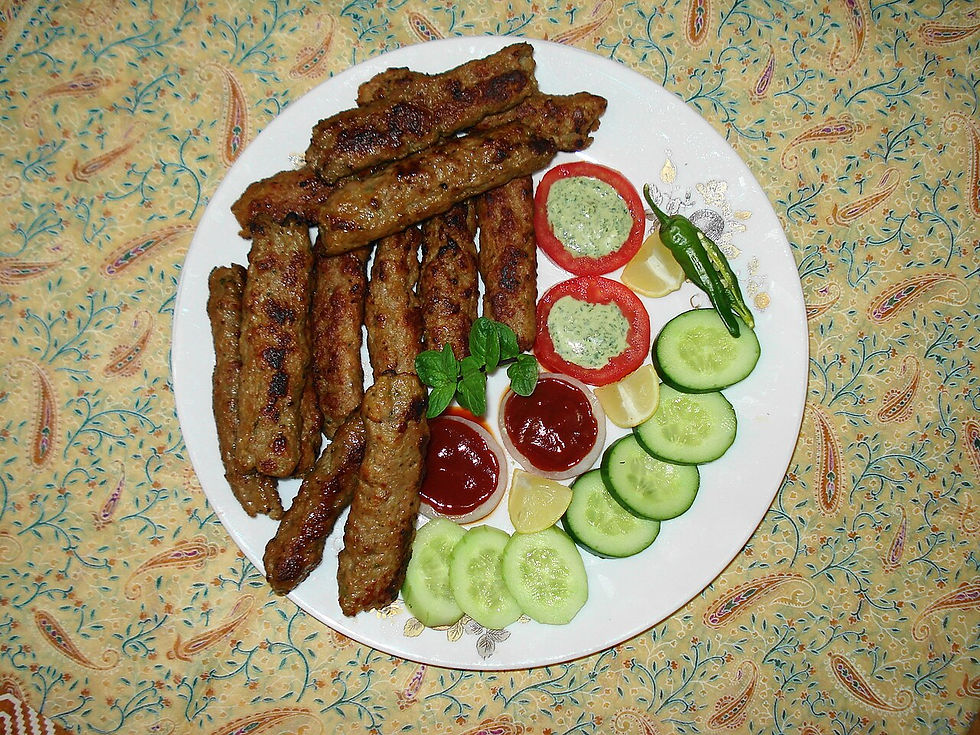
Why seekh kebab breaks: quick troubleshooting
Problem | Likely cause | Simple fix |
|---|---|---|
Kebab breaks apart on the grill | Mince too lean, or the mix wasn't kneaded enough | Use mince with about 20% fat and knead 3–5 minutes until sticky |
Falls off the skewer | Mix too warm or too wet | Squeeze the onions dry and chill the mix for at least 1 hour |
Ends fall off | Ends too thin or not sealed | Pinch both ends firmly onto the skewer |
Sags and drops into the coals | Too thick or uneven | Keep it 2–3 cm thick and even; use a flat skewer |
Sticks to the grill and tears | Grill not hot enough, or turned too early | Wait for grey coals; turn only when it lifts off easily |
Comes out dry | Too little fat, or overcooked | Use fattier mince, keep it cold, take it off as soon as it's done |
Spongy or bready | Too much egg, bread or besan | Use less binder; knead more instead |
Mushy inside | Too much raw papaya, or left too long | Use less papaya and cook sooner |
Steams instead of browning | Wet onions, herbs or washed mince | Squeeze and pat everything dry |
1. Mince and fat ratio: the most important decision
Fat is what holds a seekh kebab together and keeps it juicy. Lean mince has nothing to bind it as it cooks, so it shrinks, cracks and drops off. Most recipes aim for about 20% fat, or one part fat to four parts meat. Many kabab shops use considerably more.

Mince | Fat guidance | What to ask your qasai | Notes |
|---|---|---|---|
Beef | About 20%; add charbi if the cut is lean | "Do baar qeema, charbi mila ke" (minced twice, fat mixed in) | Most common seekh in Pakistan; holds well |
Mutton | Usually fattier already; check it | Fatty cuts, minced twice | Richer flavour; many cooks mix 50/50 with beef |
Chicken | Very lean, so it needs help | Thigh, not breast; minced fine | Add a little oil or butter, a dry binder and a longer chill; the hardest to keep on a skewer over koyla |
Local qasai mince vs packaged mince
Mince from your local qasai is usually the best choice, because you can choose the cut, the fat and how fine it's minced. Ask for it to be minced in front of you, and keep it cold on the way home. Pre-packed "lean" qeema is fine for curries but often too lean for seekh.
Why double-mincing matters
Seekh needs a fine, even mince so the proteins can bind. Running the meat through the grinder twice gives that texture. If you mince at home in a food processor, use very cold meat and short pulses. The friction of a long blitz warms the fat, which then melts out during cooking and leaves the kebab dry and crumbly.
2. Binding: egg or no egg, besan, bread, and papaya
Kneading does most of the binding (see section 4). Extra binders are optional, and too much of any of them changes the texture.
Binder | What it does | Use it when | Watch out for |
|---|---|---|---|
Nothing (no egg) | Relies on kneaded meat protein and fat | Fatty beef or mutton, well kneaded | Needs proper chilling |
Egg white | Extra protein to hold the mix | Lean or chicken mince | Too much gives a spongy, rubbery bite |
Roasted besan / roasted chana (bhuna chana powder) | Soaks up moisture and binds | Mix feels slightly wet | Roast it first or it tastes raw; 1–2 tbsp per 500 g is a common amount |
Bread (crumbs or soaked slice) | Absorbs moisture | Emergency fix for a wet mix | Makes it soft and bready; squeeze soaked bread dry |
Kacha papita (raw papaya paste) | Tenderiser, not a binder | Tough or coarse mince | Too much, or too long, breaks down the meat and makes it mushy so it won't hold. Use a small amount and don't leave it for many hours |
3. Moisture: squeeze the onions
Wet onion is the most common reason seekh kebabs break. Grated onion, green chilli, hara dhania and podina all release water. That water steams the kebab from the inside, stops it from binding and makes it slip off the skewer.
Grate or finely pulse the onion (don't purée it).
Put the onion, chilli and herbs in a muslin cloth or clean thin kitchen towel and twist hard over the sink.
The onion should look shredded and feel barely damp.
If the mince has been washed, drain it and pat it dry.
4. Kneading and chilling: how long?
Knead: Knead firmly for 3–5 minutes by hand (or with a stand-mixer paddle). Stop when the mix feels tacky and you can see fine strands (resha) when you pull it apart. A crumbly mix will break on the grill.
Chill: How long the mix rests in the fridge makes a big difference.
Rest time in the fridge | Result |
|---|---|
Under 30 min | Mix still soft; risky on charcoal |
About 1 hour | Minimum for a firm, easy-to-shape mix |
3 hours to overnight | Firmest, best flavour. Kabab shops commonly prep the mix ahead |
Shape with wet, cool hands. In a hot Multan kitchen, rinse your hands in cold water between kebabs, and put shaped skewers back in the fridge while the coals heat up.
5. Skewer technique: why seekh kebab isn't sticking to the skewer
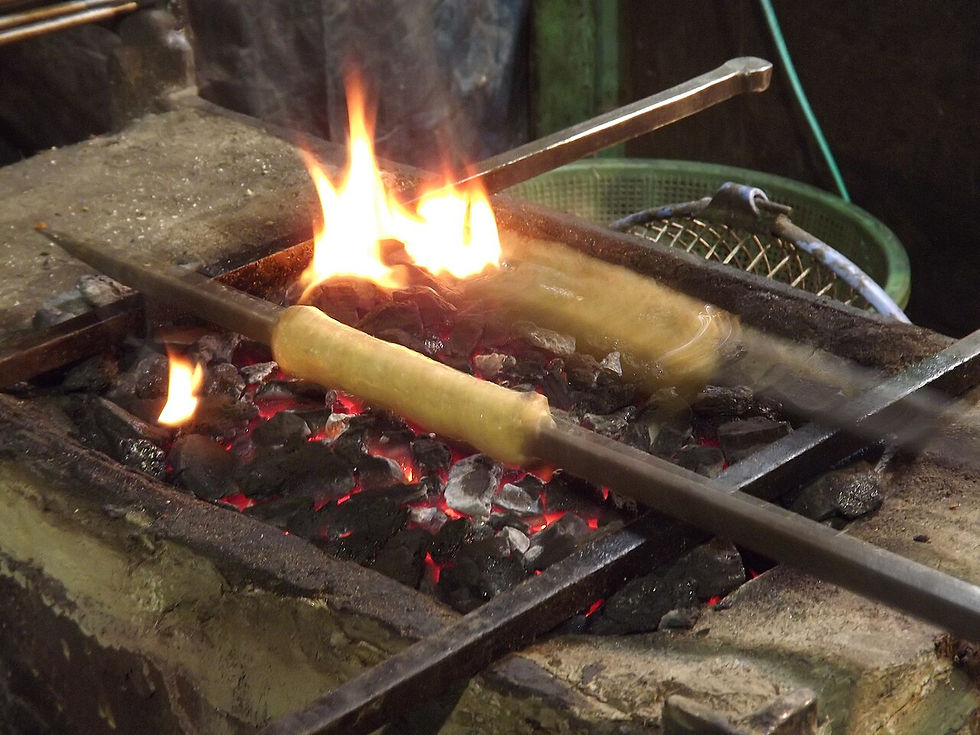
Flat vs round seekh (steel vs wooden sticks)
Flat steel seekh give the mince something to grip and stop it spinning when you turn it. This is the best option.
Round steel seekh work if they're thick, but the kebab can spin. Press the mince on firmly.
Thin wooden or bamboo sticks are the hardest. Use them for smaller, shorter kebabs, and soak them in water first so they don't burn.
Shaping
Take a portion of about 80–100 g, depending on skewer length.
With wet hands, close your fist around the skewer and squeeze the mince on.
Slide your hand up and down, pressing with your fingers, to spread it into an even log with no air pockets.
Keep it about 2–3 cm thick and even. Thick spots sag, thin spots tear.
Pinch the top and bottom ends firmly onto the skewer.
Seekh kebab without skewers
No seekh? Roll the mince into logs and cook them on a tawa, in the oven or in the air fryer. Chill the logs first so they hold their shape.
6. Heat: koyla vs gas bhatti vs tawa vs oven/air fryer

High heat sets the outside quickly, and that crust holds the kebab together. Low heat lets the fat melt before the crust forms, and the kebab slides off.
All times and temperatures below are starting points. Grills, tawas and air fryers vary, so check that the centre is cooked through before serving.
Heat source | How to set it up | Approx. time | Tips |
|---|---|---|---|
Koyla (charcoal) | Wait until coals are grey-white with no flame. Rest skewers on the edges of the grill, not on a grate | 10–12 min total | Keep turning every 2 min; brush with oil or ghee; flare-ups mean fat is dripping, so move the skewer |
Gas bhatti / gas grill | Preheat on high; oil the grate | 10–12 min | Less smoke flavour; use the dhuan finish below |
Tawa / frying pan | Medium-high, 1–2 tbsp oil; best without skewers | 8–10 min | Don't crowd the pan; turn gently with a flat spatula |
Oven | Rack over a tray, 220–240 °C | 12–15 min | Turn halfway; finish under the grill for colour |
Air fryer | 180–200 °C | 10–12 min | Brush lightly with oil; turn halfway; don't overlap |
Always cook minced meat right through to the centre. If you use a thermometer, the usual food-safety target for minced meat is 71 °C. Don't press, poke or turn the kebab too early. When the crust has formed it releases on its own.
Dhuan (smoke) finish: put the cooked kebabs in a pot, set a small foil cup in the middle with a glowing coal, add a few drops of ghee, and cover for about a minute.
7. How to make seekh kabab juicy
Keep the fat in: about 20% fat, and no squeezing or pressing on the grill.
Mince cold so the fat stays in the meat.
Don't overcook. Take them off as soon as they're cooked through.
Baste with a little ghee or oil while turning.
Rest for 2 minutes before sliding them off the skewer.
Peshawari vs Lahori vs Karachi seekh kebab
Peshawari | Lahori | Karachi | |
|---|---|---|---|
Typical meat | Beef or mutton, often fatty | Beef, or beef/mutton mix | Beef; chicken common too |
Spicing | Restrained: salt, black pepper, coriander seed, green chilli | Garam masala, red chilli, mint and coriander | Bolder, spicier masala |
Texture | Coarser, meatier | Fine and juicy | Very soft; often tenderised |
Cooking | Charcoal | Charcoal, dhuan finish common | Charcoal at roadside BBQ stalls |

Restaurant vs homemade: why the kabab shop version holds better
More fat than most home cooks use.
Double-minced meat, minced fresh.
Raw papaya used carefully for tenderness.
Mix made ahead and kept cold.
Very hot koyla, much hotter than a home stove.
Practice: kababis shape skewers all night, every night.
Short on time? Frozen seekh kabab
If you want shop-style kebabs without the qasai trip, kneading and chilling, our frozen seekh kabab (12 pcs) and beef seekh kabab (12 pcs) come shaped and ready to cook. Cook them from frozen, because thawed kebabs are softer and more likely to break. Follow the pack instructions and the heat table above.
Prefer a flat kebab that doesn't need a skewer at all? Try our beef chapli kabab (8 pcs), or for a quick snack the chicken hot shots (15 pcs). See the whole range of beef products, chicken products or all products.
How to make seekh kebab that doesn't fall apart (step by step)
Buy the mince: 500 g beef or mutton, double-minced, about 20% fat (ask for charbi). Keep it cold.
Dry the aromatics: grate 1 small onion and add chopped green chilli, hara dhania and podina. Squeeze everything dry in muslin.
Season: ginger-garlic paste, salt, red chilli, toasted crushed coriander seed, zeera and garam masala. Optionally add 1–2 tbsp roasted besan or bhuna chana powder.
Knead: 3–5 minutes, until sticky and stringy.
Chill: cover and refrigerate at least 1 hour, ideally 3 hours or overnight.
Skewer: with wet hands, press 80–100 g onto a flat seekh as an even log 2–3 cm thick. Seal the ends.
Heat: grey koyla, or a preheated very hot grill, oven or air fryer (see the table).
Cook: turn only when the kebab releases, then every couple of minutes, until cooked through. That's roughly 10–12 minutes on charcoal.
Finish: optional dhuan smoke, then rest for 2 minutes.
Serve: slide them off with a piece of naan. Serve with onion rings, lemon and podina chutney.
Frequently asked questions
Q: Seekh kabab tootne ki wajah kya hai? (Why does seekh kebab break?)
A: Usually the mix is too wet, too lean or too warm. Squeeze the onions dry, use mince with about 20% fat, knead until sticky and chill it for at least an hour.
Q: Why is my seekh kebab not sticking to the skewers?
A: The mix is too warm or wet, or the skewer is round and thin. Chill the mix, use flat steel seekh, shape with wet hands and pinch the ends tight.
Q: Steel or wooden sticks for seekh kebab?
A: Flat steel seekh hold best and conduct heat into the centre. Wooden sticks work for smaller kebabs; soak them in water first.
Q: Should I add egg to seekh kebab?
A: It's optional. Fatty, well-kneaded mince doesn't need it. A little egg white helps lean or chicken mince, but too much makes the kebab spongy.
Q: Is besan or roasted chana good for binding seekh kebab?
A: Yes, 1–2 tbsp of roasted besan or bhuna chana powder per 500 g soaks up moisture and helps bind. Roast it first so it doesn't taste raw.
Q: Does raw papaya make seekh kebab break?
A: It can. Kacha papita is a tenderiser, and too much or too long a rest breaks the meat down until it won't hold. Use a little and cook soon after.
Q: How do I make seekh kabab juicy?
A: Use mince with enough fat, mince it cold, don't press the kebab while cooking, baste with ghee and don't overcook.
Q: Can I make seekh kebab without skewers?
A: Yes. Roll the mince into logs, chill them and cook on a tawa, in the oven or in an air fryer.
Q: Should I thaw frozen seekh kabab before cooking?
A: Generally no. Cooking from frozen helps them keep their shape. Follow the pack instructions.
Q: Where can I buy ready-to-cook seekh kabab in Multan?
A: You can order our frozen seekh kabab online for delivery in Multan.
Skip the qasai, the kneading and the chilling. Our seekh kabab comes shaped, frozen and ready for the tawa, air fryer or BBQ. Order frozen seekh kabab for delivery in Multan →
References
Seekh Kabab (photo by Miansari66, CC0), Wikimedia Commons. Licence: CC0
Minced meat (photo by Erwin, CC0), Wikimedia Commons. Licence: CC0
Kebabs being made at Dilshad Ahmed kebab stall, Colootola (photo by Sumitsurai, CC BY-SA 3.0), Wikimedia Commons. Licence: CC BY-SA 3.0
Seekh kebabs on fire (photo by Sumitmalhotra, CC BY-SA 4.0), Wikimedia Commons. Licence: CC BY-SA 4.0
Pakistani food: beef kabobs (photo by Jess Lander, CC BY 2.0), Wikimedia Commons. Licence: CC BY 2.0
USDA FSIS: Safe minimum internal temperature chart (ground meat, 160 °F / 71 °C)


Comments